Why it no longer makes much sense to keep building websites with WordPress
For many years, WordPress has been the easy solution for building a website. And it must be said clearly: it has done a lot of good. It has allowed small businesses, professionals and organizations to have an internet presence without large budgets or technical teams.
But the context has changed. And continuing to use WordPress today, in many cases, is continuing to use a tool that no longer fits current needs.
This is not about trends or technicalities. It’s about common sense.
WordPress is not bad, but it’s no longer suitable for everything
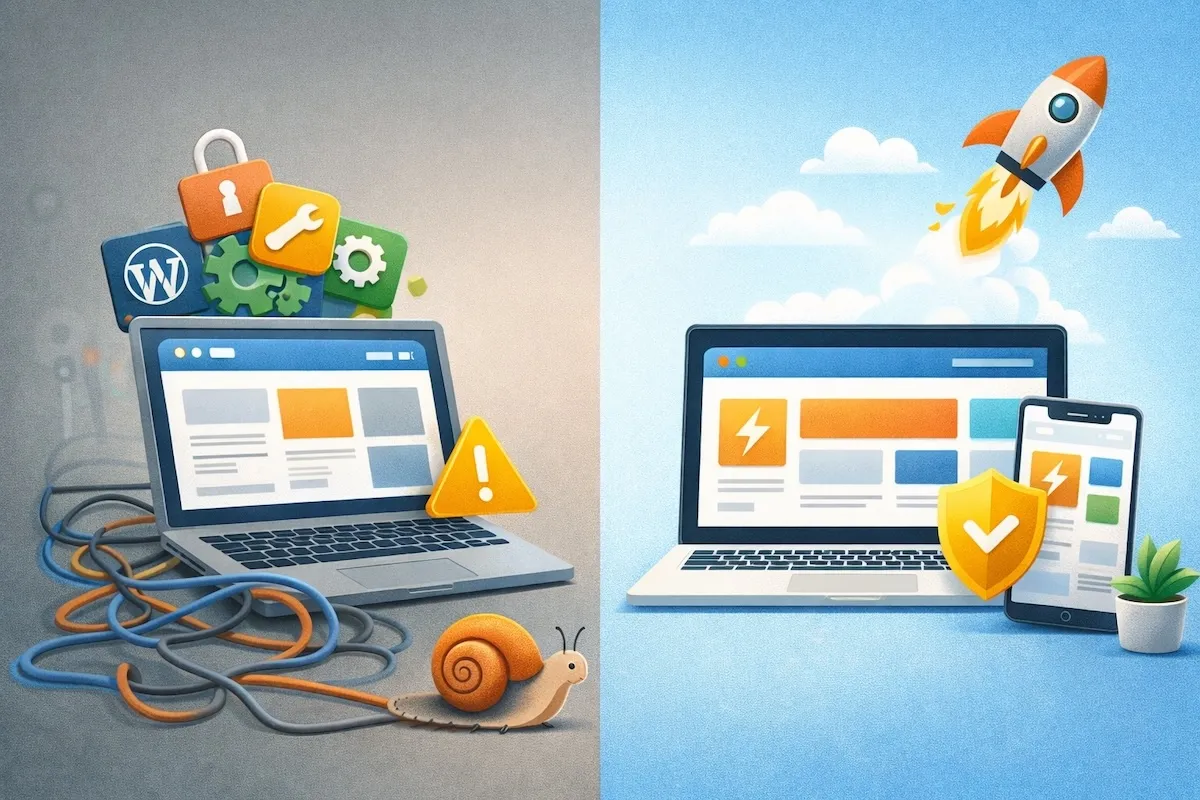
WordPress was born as a simple content manager. Over time, layers and more layers have been added: plugins, themes, visual builders, security extensions, performance extensions…
The result is well known to many:
- Slow websites
- Constant updates
- Errors that appear without touching anything
- Excessive plugin dependency
- Fear of updating “in case it breaks”
This is not occasional poor management. It’s a direct consequence of the model.
A website shouldn’t be fragile
Today a website is a business tool. It must be fast, secure, stable and easy to maintain.
With WordPress, too often the opposite happens. Any small change can affect everything. And this generates a very common feeling: insecurity.
“Better not touch anything, it’s working now.”
This thinking is a problem.
Modern JavaScript technologies change the game
Modern websites built with current JavaScript technologies don’t work like WordPress.
They don’t depend on a database loading everything on every visit or dozens of interconnected plugins.
They work differently:
- They load much faster
- They are lighter
- They have fewer failure points
- They need much less maintenance
And most importantly: they do exactly what the business needs, no more, no less.
”But I just want a simple website”
That’s precisely why.
Today, for many businesses, a website must:
- Explain well what they do
- Convey trust
- Load fast on mobile
- Rank correctly on Google
- Be easy to update
For all this, WordPress is often too much. Too complex, too heavy, too dependent on external things.
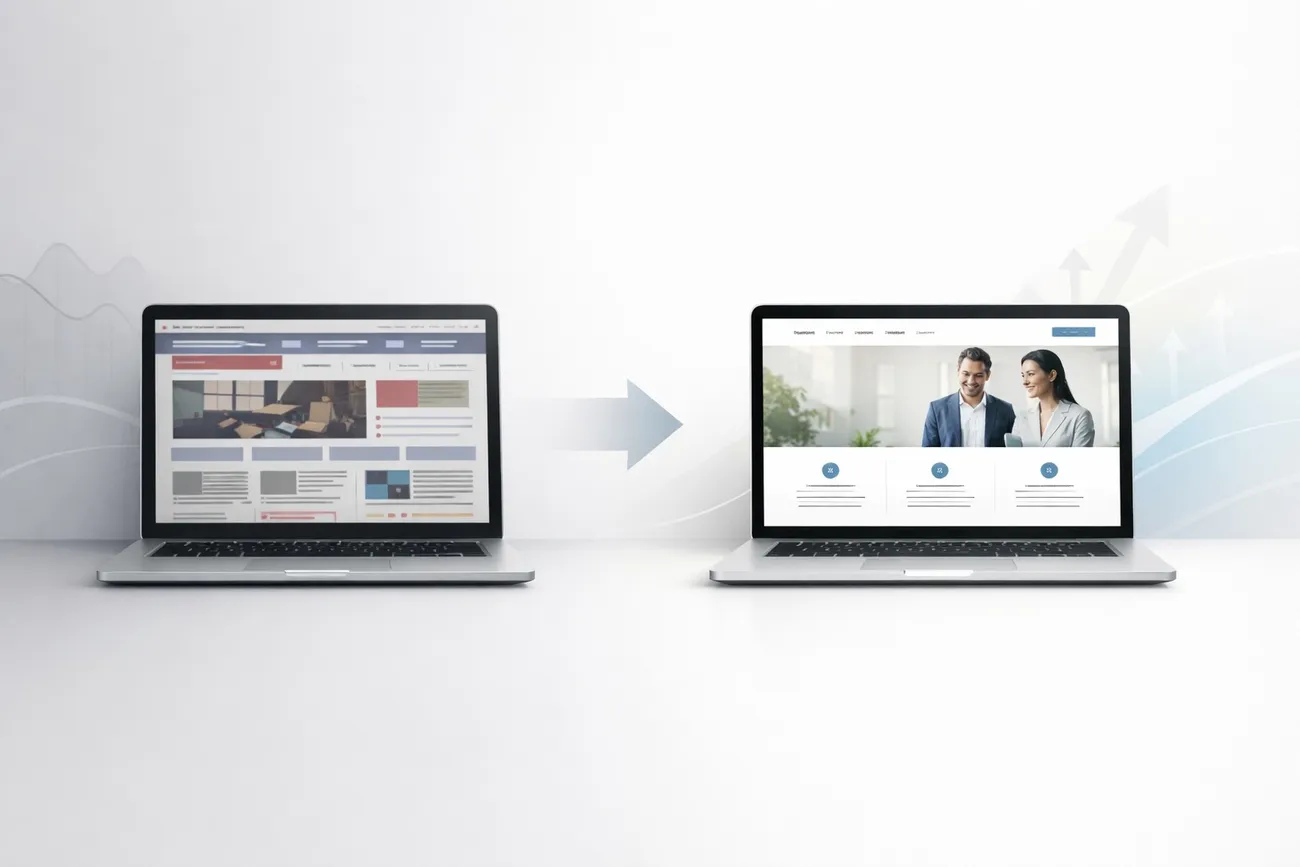
A modern website can be much simpler inside, even though it looks the same or better on the outside.
Less maintenance, lower long-term costs
A key aspect that is often not mentioned: the real cost of a website is not building it, it’s maintaining it.
With WordPress, maintenance is constant:
- Updates
- Conflicts
- Plugins that stop working
- Versions that become obsolete
With modern technologies, many websites practically don’t need technical maintenance for months or years.
For a small business, this is a huge advantage.
It’s not a technical issue, it’s strategic
Betting on a modern website is not making it more complicated. It’s quite the opposite.
It’s reducing dependencies, gaining stability, improving speed and thinking about the future, not just today.
WordPress can still make sense in very specific cases. But continuing to use it out of inertia, because “it’s always been done this way”, is no longer a good decision.
In summary
WordPress was a great solution.
But the web world has evolved.
Today, modern technologies allow building faster, more secure, more stable and more sustainable websites in the long term.
And this is not a technical detail.
It’s a smart decision.